
By Chelsea Rae Bourgeois MS, RDN
Staying hydrated helps your body do its everyday jobs—like keeping your body temperature steady, supporting circulation, and supporting brain function (just to name a few!). Still, many people find it harder than expected to stay hydrated.
The good news? Hydration doesn’t have to be complicated. With a few simple, consistent habits, most people can easily meet their daily fluid needs.
Understanding Your Daily Fluid Needs
There isn’t a one-size-fits-all recommendation for daily fluid intake, but research shows a good place to start is 3.7 liters per day for men and 2.7 liters per day for women.1 This includes all fluids you take in throughout the day, not just water. Beverages like milk, juice, and tea, and even the fluids in food all count toward your daily goal.
However, your needs can increase depending on your daily routine and your environment. You may need to up your fluid intake if you:
- are physically active
- live in a hot climate
- are experiencing an illness (especially with fever, vomiting, and/or diarrhea)
- are pregnant or breastfeeding
Your registered dietitian can help you establish daily hydration goals, but it’s also important to listen to your body along the way. Common signs that you might need more fluids include:2
- feeling thirsty
- dark yellow urine
- fatigue
- dry mouth
- frequent headaches
- muscle cramps
- feeling dizzy
Simple Hydration Tips You Can Actually Stick With
Knowing how much you need is one thing—but actually getting there each day can be a different story. It’s important to set yourself up for success. Small simple habits can make a big difference.
- Keep a water bottle with you throughout the day: As the saying goes, “out of sight, out of mind.” Having a water bottle nearby makes it easier to remember to drink. Try to sip on fluids throughout the day instead of waiting until you feel extremely thirsty and drinking large amounts all at once.
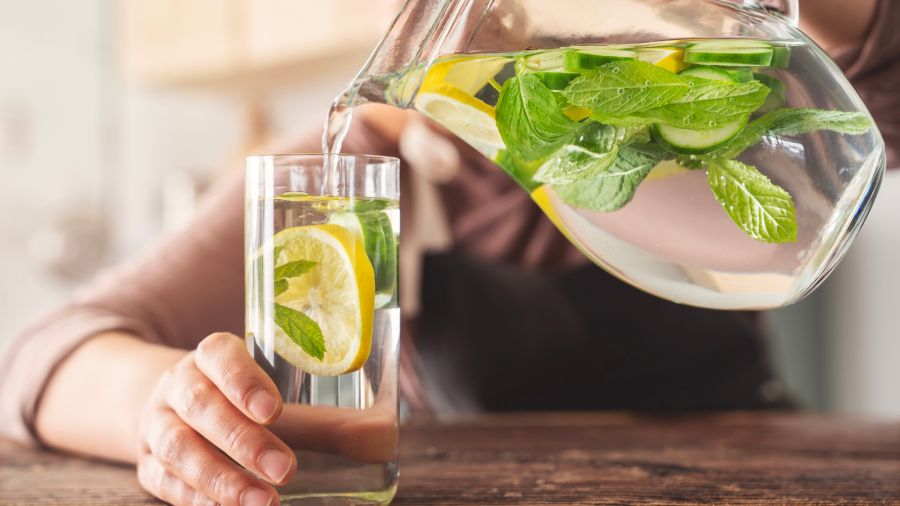
- Make your water more appealing: Adding things like citrus slices, berries, cucumber, mint, or herbs to your water can enhance its flavor and make it more appealing to drink. The aqua fresca possibilities are endless!
- Use reminders: Set an alarm on your phone or use a hydration-tracking app to prompt regular water intake throughout the day.
- Drink before, during, and after exercise: Staying hydrated with physical activity helps replace fluids lost through sweat. It also supports your energy and performance – a win/win! Try to drink fluids consistently before you start, take small sips during your workout, and rehydrate afterward.
- Include water-rich foods: Eat fruits and vegetables with a high-water content. Foods like watermelon, strawberries, cucumbers, leafy greens, cottage cheese, yogurt, broths, and soups can all contribute to your daily fluid needs. Throw them in a refreshing salad or incorporate them into your other meals throughout the day!
- Be mindful of foods and drink that can work against hydration: High-sodium foods, sugary drinks, and too much caffeine can make it harder to stay hydrated. You don’t have to avoid these completely, but it’s important to balance them out with water and more hydrating choices.
Where Do Electrolytes Come into Play?
Great question—so glad you asked! Electrolytes are minerals like sodium, potassium, and magnesium. They play a key role in fluid balance, muscle function, and nerve signals.3 Most people get enough from their food and everyday beverages, so sports drinks or electrolyte packets aren’t always needed. However, you may need more electrolytes if you’re sweating a lot in the heat, during a workout, or when you’re sick.3 Your registered dietitian can give you individualized guidance when it comes to supplementing your electrolyte intake.
Bottom Line
Hydration doesn’t have to be complicated. Drink water regularly, eat water-rich foods, and pay attention to how you feel. Small, consistent habits can make a big difference over time and keep your body operating at its best!
References:
- Seal AD, Colburn AT, Johnson EC, et al. Total water intake guidelines are sufficient for optimal hydration in United States adults. Eur J Nutr. 2023;62(1):221-226. doi:10.1007/s00394-022-02972-2
- Medline Plus. Dehydration. Medlineplus.gov. Published 2023. https://medlineplus.gov/dehydration.html
- Keefe MS, Benjamin CL, Casa DJ, Sekiguchi Y. Importance of Electrolytes in Exercise Performance and Assessment Methodology After Heat Training: A Narrative Review. Applied Sciences. 2024; 14(22):10103. https://doi.org/10.3390/app142210103
