
It’s easy to fall into a routine of eating the same foods day after day. While this can feel convenient, it may limit the nutrients your body needs to truly thrive. Eating a wide variety of foods doesn’t just support overall nutrition adequacy, it also plays a key role in chronic disease prevention, gut microbiome health, and long-term wellness.
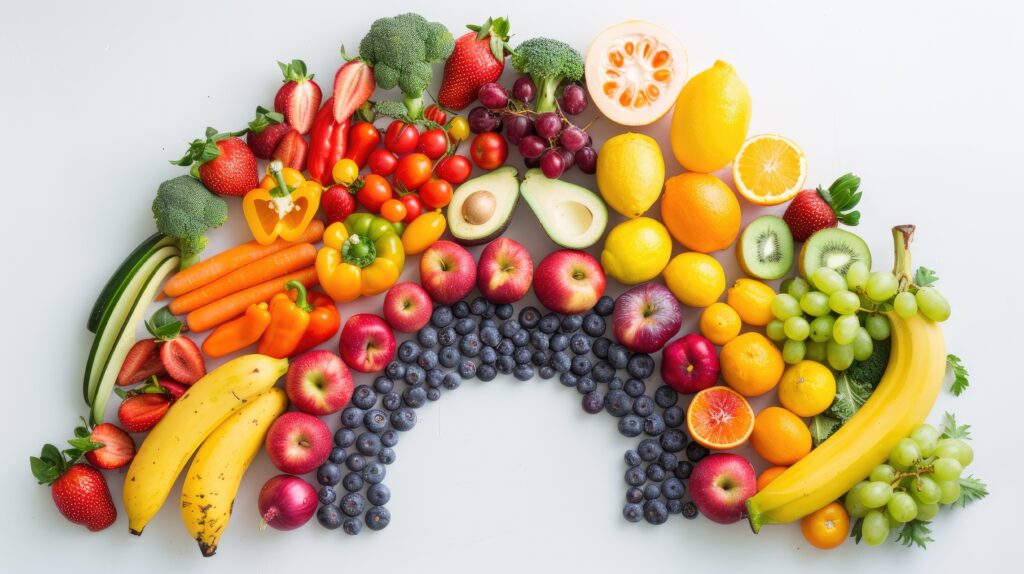
Most people are familiar with macronutrients: carbohydrates, protein, and fat. But beyond macros, there’s another important layer of nutrition: micronutrients. Vitamins, minerals, and phytonutrients differ across foods, especially fruits and vegetables. One simple way to increase micronutrient intake is by “eating the rainbow.” Different colors in plant foods signal different phytonutrient compounds, each offering unique health benefits.
Red Foods
- Phytonutrient Family: Carotenoids.
- Foods include tomatoes, watermelon, dragon fruit, red bell peppers, apples, papaya, strawberries, beets, and red onion.
- Key vitamins and minerals include folate, potassium, vitamin A, and vitamin C.
- Health benefits include a reduced risk of bladder, lung, and colon cancers, improved heart health, protection from sun damage, support for eye health, and potential reduction in inflammation and pain.
Orange and Yellow Foods
- Phytonutrient Family: Carotenoids.
- Foods include pumpkin, carrots, squash, oranges, sweet potatoes, yellow peppers, bananas, pineapple, mango, apricots, peaches, cantaloupe, and corn.
- Key vitamins and minerals include vitamin A, folate, potassium, and vitamin C.
- Health benefits include heart disease prevention, support for healthy cell communication, improved eye health, and enhanced immune function.
Green Foods
- Phytonutrient Families: Glucosinolates, phytoestrogens, and flavonoids.
- Foods include sprouts, lima beans, split peas, broccoli, kale, cabbage, arugula, spinach, Brussels sprouts, avocado, and green herbs such as mint, rosemary, sage, thyme, and basil.
- Key vitamins and minerals include vitamin C, vitamin K, and folate.
- Health benefits include a lower risk of prostate and lung cancer, improved heart health, support for eye health, and regulation of gene expression.
Blue and Purple Foods
- Phytonutrient Family: Flavonoids.
- Foods include blueberries, blackberries, elderberries, Concord grapes, raisins, eggplant, plums, figs, prunes, and purple cabbage.
- Key vitamins and minerals include manganese, potassium, vitamin B6, vitamin C, and vitamin K.
- Health benefits include delayed cellular aging, improved heart health by helping prevent blood clot formation, and enhanced brain function.
White and Brown Foods
- Phytonutrient Family: Flavonoids.
- Foods include onion, garlic, soybeans, cauliflower, leeks, parsnips, and mushrooms.
- Key vitamins and minerals include folate, magnesium, manganese, potassium, vitamin B6, and vitamin K.
- Health benefits include anti-tumor properties, improved heart health, and anti-inflammatory effects.
Eat the Rainbow Challenge
Eating fruits and vegetables doesn’t have to feel stressful, making it a game can help. Aim to consume at least 15 different plant-based foods in one week. Increase dietary diversity by including fruits, vegetables, and legumes from all color categories. If you consistently reach 15, challenge yourself to increase to 20, 25, or even 30 different plant foods per week. Good luck!